Trump's War on Wind Is Collapsing in Court. So It Moved to the Pentagon.
On June 10, the Department of Justice filed a motion to dismiss one of its own appeals. There was no press release, no briefing, no acknowledgment that anything had happened. But with that single filing, the Trump administration quietly abandoned its defense of the centerpiece of its war on wind energy: the federal permitting freeze the president signed on his first day back in office.
The permitting ban is dead. The war on wind is not.
Three Strikes in a Massachusetts Courtroom
Start with the scoreboard, because it is lopsided. On January 20, 2025, Trump signed an executive order that withdrew the entire outer continental shelf from new offshore wind leasing and paused every federal authorization for wind projects — onshore and offshore — pending an open-ended review. It was the most aggressive single action any president has taken against a mature American energy industry.
It has been losing in court more or less continuously ever since.
On December 8, 2025, Judge Patti Saris of the U.S. District Court for the District of Massachusetts ruled in favor of a coalition of 17 states and an energy trade group, vacating the part of the order that directed agencies to stop issuing permits. Four months later, on April 21, 2026, a second judge in the same district — Denise Casper — struck down five more policies that the Interior Department and the Army Corps had rolled out to throttle wind and solar permitting through the back door: tiered secretarial reviews, a ban on developers using the federal species-consultation database, and prioritization rules written specifically to disfavor renewables. The court called them "arbitrary and capricious."
The June 10 filing was the third strike. The administration had appealed the Saris ruling to the First Circuit back in February, then simply never filed an opening brief. When the deadline pressure became unavoidable, it folded rather than make its case. As Heatmap put it, "the door to federal permitting is now unlocked again."
The Weapon That Still Works
Here is why none of that means wind has won.
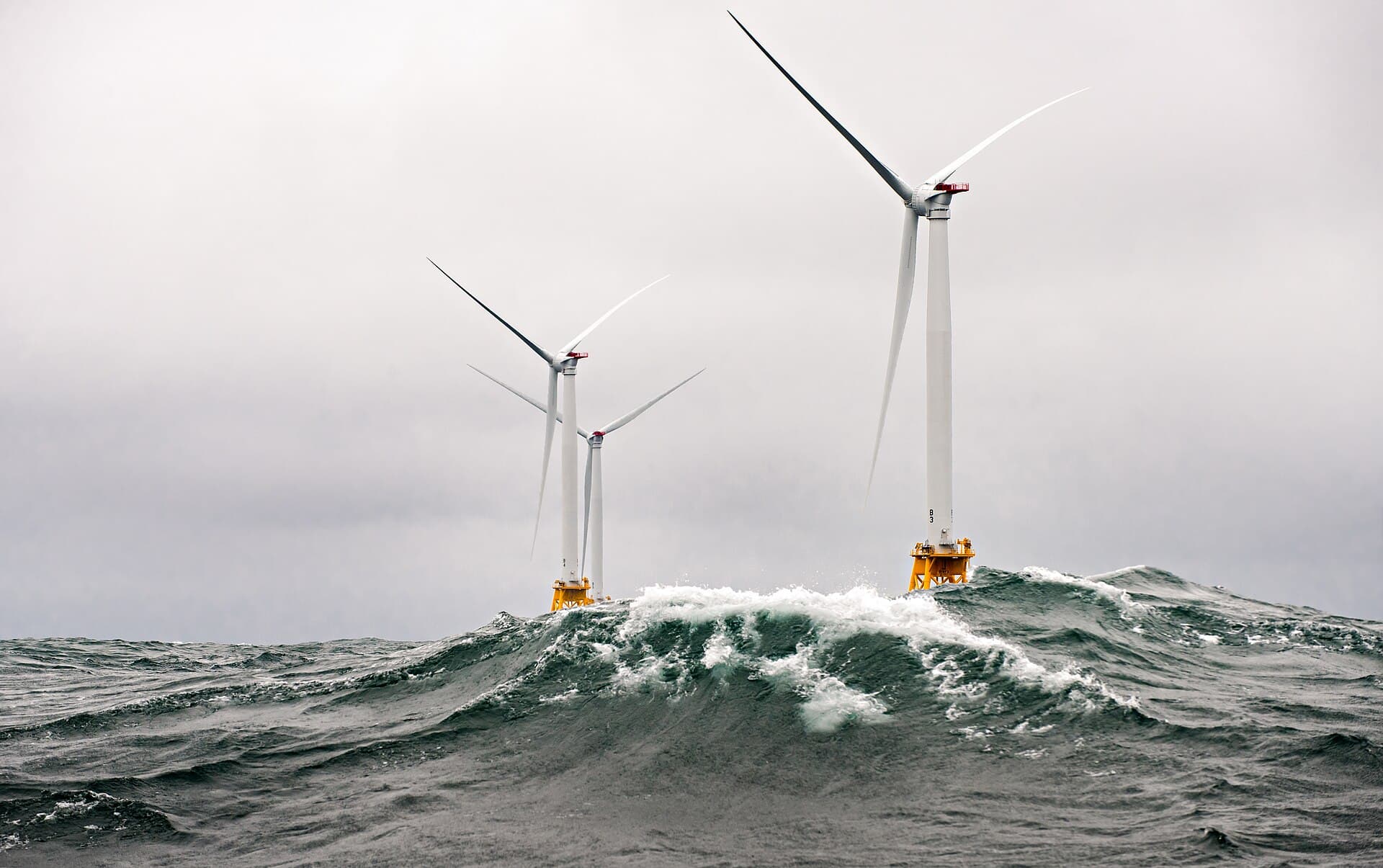
Eleven weeks before it lost the permitting fight on appeal, the administration had already opened a second front — one that does not run through the Administrative Procedure Act. On December 22, 2025, it issued stop-work orders on five offshore wind projects that were already under construction off the East Coast, citing national-security concerns raised by the Pentagon. The stated rationale: the rotating blades and reflective towers of offshore turbines can interfere with the radar used to detect incoming threats.
The projects caught in that order were not speculative bets on a spreadsheet. They included Dominion Energy's $11.2 billion Coastal Virginia Offshore Wind project, the largest in the country, and Orsted's Revolution Wind off New England, which was nearly finished. Dominion sued. Orsted sued. New York's attorney general filed two more suits. This week, a coalition of renewable trade groups went back to court to ask judges to lift what they describe as the Pentagon's "total halt" on wind power.
They will find it a harder target than the permitting freeze. Courts have proven willing to tell the Interior Department that its paperwork was arbitrary. They are far more reluctant to second-guess the Department of Defense when it invokes national security. That deference is precisely why the rationale was chosen. The permitting ban was a blunt instrument any judge could see through; "national security" is a key that opens a different lock — and the administration reached for it at almost the exact moment the first one snapped off in its hand.
The Honest Accounting
It would be easy to write this week up as a clean industry victory, and it isn't one.
The piece of Trump's original order that survived Judge Saris's ruling was the withdrawal of the outer continental shelf from new leasing. That part stands. No new offshore wind areas are being auctioned, which means the pipeline of projects beyond the current generation stays frozen even as today's projects claw their way through. The permitting door is unlocked for developers who already hold leases; it remains bolted shut for everyone behind them.
The deterrent damage is also already done, by design. Eighteen months of stop-work orders, appeals, and national-security reviews have made offshore wind look radioactive to lenders and corporate offtakers. Fortune estimated that the country has spent roughly $2 billion simply canceling wind projects over this period — money that bought nothing but delay. A developer can win in court and still watch its financing evaporate while the case drags on. Winning the legal argument and winning the project are not the same thing, and the administration has been content to lose the former as long as it keeps inflicting the latter.
Why Wind Is Winning Anyway
And yet.
This same month, the largest wind farm in the United States — Pattern Energy's 3,650-megawatt SunZia project in New Mexico, nearly two decades in the making — began commercial operations. Onshore wind, which the permitting order also targeted, has kept moving largely because most of it sits on private land and state-permitted ground that the federal government cannot easily reach. The offshore projects that were already permitted are grinding forward through the litigation. And the Saris and Casper rulings, now effectively final, mean the next developer to file for a federal permit does so under the ordinary rules rather than a presidential blockade.
The lesson is the one this site has been making for months: the clean energy industry stopped waiting to be rescued and started fighting on the terrain it was handed. The same stretch of weeks in which solar money was retiring the loudest IRA opponent in Congress, wind developers and 17 state attorneys general were methodically taking an executive order apart in federal court. This is what hardball looks like when you keep playing it after the cameras leave.
The Read From Here
The war on wind has moved one front inland. The permitting freeze is finished — the administration conceded it rather than defend it, and the precedent now runs the other way. The fight that matters from here is the national-security front, where the legal deck is stacked toward the government and the real question is how long courts will let "radar interference" justify halting $11 billion projects that the Pentagon's own earlier reviews had already cleared.
Watch the Revolution Wind and Coastal Virginia cases. If judges force the Pentagon to show its work the way they forced Interior to show its, the national-security front collapses the same way the permitting one did, and the administration runs out of levers before the 2027 budget fight even begins. If they don't, "national security" becomes the template for every future administration that wants to kill an energy source it dislikes without having to win the argument.
Either way, the quiet surrender of June 10 told you which direction this is heading. Administrations that are winning do not dismiss their own appeals.