The Ohio Power Siting Board Has Lost Its Way — And Ohioans Are Paying the Price
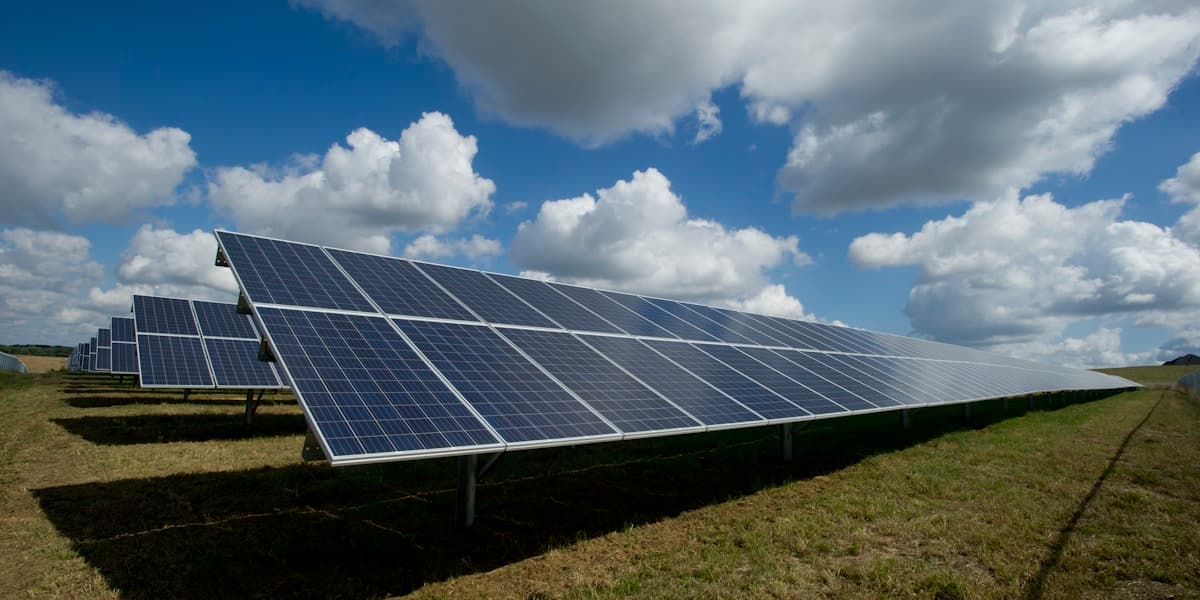
The Ohio Power Siting Board was created for a simple and important reason: to ensure that energy infrastructure decisions are made based on technical merit, legal standards, and the broad public interest — not on the political winds of the moment. For decades, it served that purpose. Today, it has become something else entirely: a rubber stamp for local political opposition, no matter how thin the evidence, no matter how fabricated the outrage, and no matter how steep the cost to the people of Ohio.
What is unfolding at the OPSB right now is not a story about solar panels. It is a story about a regulatory body that has abandoned its statutory mandate, caved to organized political pressure, and in doing so is actively undermining Ohio's economic future at the worst possible time.
A $98 Million Test Case in Morrow County
The most damning illustration is the Crossroads Solar Grazing Center, a proposed 94-megawatt solar-plus-agriculture project in Morrow County. Open Road Renewables planned to invest $98 million to build a facility that would combine solar generation with sheep grazing — a model that preserves agricultural use of the land while generating clean power for Central Ohio. The project would create 305 construction jobs, deliver nearly $300,000 in annual tax revenue, and provide $100,000 per year in voluntary payments to local schools.
In December 2025, after months of rigorous review, OPSB staff recommended approval. The project met every one of the eight statutory criteria required under Ohio law, including the critical finding that it would serve the public interest. Staff acknowledged local opposition but concluded it was not especially prominent or compelling.
Six weeks later — just days before the evidentiary hearing — staff reversed itself.
The stated reasons were twofold: public opposition had suddenly become overwhelming, and local government opposition had become unanimous. Both justifications collapsed under scrutiny.
The Fake Comments That Changed Everything
During the evidentiary hearing, it emerged that nearly 100 public comments opposing Crossroads Solar were fabricated. They were filed anonymously or under names that don't exist, from addresses that can't be verified, by people who don't live in Morrow County. Every single fabricated comment opposed the project.
Canary Media independently verified 34 of these fraudulent submissions by cross-referencing names and addresses against voter records and public directories. Of those 34, only a single name could be matched to a real person at the stated address — and that person's email bounced back as undeliverable. Seven more suspect comments were filed even after the developer began testifying about the fabrications.
When the fake, anonymous, and duplicate comments are stripped out, the numbers tell a very different story: more than 78 percent of verifiable public comments actually support the project. Even within the three townships where it would be built, 44 percent of commenters were in favor.
Yet OPSB staff treated every one of those fabricated comments as a legitimate expression of public sentiment. The board has no mechanism to detect fraudulent submissions, no system for verifying identities, and — most troubling — no apparent interest in building one.
One Trustee, One Vote, One Reversal
The second pillar of the staff's reversal was equally flimsy. After months of neutrality, Cardington Township reversed its position on the project when a single trustee changed his mind — not because of any change in the project's design, not because of new evidence about impacts, but because he objected to verbiage in the OPSB staff report itself. The township then voted 2-1 against the project, making local government opposition technically unanimous.
That single vote by a single local official was enough for OPSB staff to reverse a months-long technical review and recommend denial of a $98 million energy investment.
Under cross-examination, Jess Stottsberry — the OPSB geologist who authored the reversed recommendation — could cite only the Cardington resolution as the specific reason the staff changed its position. Not engineering concerns. Not environmental findings. Not legal deficiencies. A township resolution.
When staff witnesses were pressed on what constitutes overwhelming public opposition, the answers were incoherent. One suggested a 60-40 split against a project qualifies. Another testified that an 85-15 split in favor does not qualify as overwhelming support. These are not the standards of a rigorous regulatory process. They are the standards of an agency making it up as it goes.
Stark Solar: Same Story, Different County
Crossroads is not an isolated case. In April 2025, the OPSB rejected the Stark Solar project — a 150-megawatt facility backed by Samsung C&T that would have covered 860 acres in Washington Township, Stark County. The board's own review found zero technical problems with the proposal: no issues with land use, the environment, drainage, or any other substantive criterion.
The board killed it anyway, citing opposition from Republican county commissioners and township trustees. Gone with it were 381 construction jobs, 11 permanent positions, and an estimated $57 million in property tax revenue over the project's 40-year lifespan.
The Stark Solar rejection was the fifth utility-scale solar project the OPSB has blocked in recent years, with local political opposition serving as the sole basis in each case. Several additional projects were withdrawn after staff signaled rejection was coming — again, based not on technical deficiencies but on the political preferences of local officials.
As Cleveland.com reported, the combined capacity of solar projects rejected or preempted by the OPSB would have been sufficient to power every household in Cleveland, Columbus, and Cincinnati — with electricity to spare.
The Double Standard
The OPSB's deference to local opposition is not applied evenly. While solar projects are killed by a handful of township trustees, natural gas operators have won rights to drill beneath Ohio's state parks and public lands — over near-unanimous public opposition. The board's concern for local sentiment, it turns out, is highly selective.
This double standard undermines any claim that the OPSB is acting as a neutral arbiter of the public interest. It is acting as a political body, and a captured one at that — responsive to organized anti-solar campaigns while indifferent to the economic and energy needs of the broader state.
The Ohio Supreme Court Already Told Them
In December 2025, the Ohio Supreme Court addressed this exact problem in its ruling on the South Branch Solar project in Hancock County. The court was unambiguous: while local government and public input may be informative in OPSB proceedings, it cannot be determinative of whether a project serves the public interest.
The distinction matters enormously. The OPSB's statutory mandate exists precisely because energy infrastructure decisions carry statewide consequences that extend beyond township boundaries. Reliable, affordable electricity is the foundation of economic development. That is why the legislature created a state-level siting board in the first place — to prevent parochial interests from blocking projects that serve the broader public good.
Yet the OPSB's staff recommendation on Crossroads Solar proceeds as if the Supreme Court ruling doesn't exist. The entire weight of the denial rests on the same local-opposition rationale the court explicitly said cannot be determinative.
How This Hurts Ohio
Ohio is entering a period of unprecedented energy demand. Data centers, manufacturing reshoring, and electrification are driving massive growth in electricity consumption. The state needs tens of thousands of megawatts of new generation capacity — from all sources — to keep the lights on and the economy growing.
Every solar project the OPSB kills sends a clear signal to energy investors: Ohio is not open for business. Not for solar, at least. Developers are already pulling applications rather than spend years and millions of dollars navigating a process where fabricated public comments carry more weight than technical compliance, and where a single township trustee can override years of engineering review.
The economic damage is not abstract. The Crossroads and Stark Solar projects alone represent nearly $150 million in direct investment, nearly 700 construction jobs, millions in annual tax revenue, and decades of property tax payments to local governments and school districts. Those are real dollars that won't flow into Morrow County or Stark County. They'll flow into Indiana, or Pennsylvania, or any other state where the siting process rewards merit rather than political opposition.
And it's not just about the projects themselves. Ohio's three largest cities have committed to reducing greenhouse gas emissions. Two-thirds of Ohio's top 100 employers need renewable energy to meet their sustainability commitments. The Ohio Chamber of Commerce — not typically a bastion of environmental activism — has formally intervened in support of Crossroads Solar, arguing that the state cannot craft energy policy one township at a time.
What Needs to Change
The OPSB was a good idea. Ohio genuinely needs a centralized authority to evaluate energy projects on their technical merits and statewide impact. But the board has drifted so far from its mandate that it now functions as the opposite of what it was designed to be: a mechanism for local political vetoes over state energy policy.
Three reforms are urgently needed:
- Comment verification: The OPSB must implement basic identity verification for public comments. That fabricated submissions from nonexistent people can influence a $98 million regulatory decision is an embarrassment. Every other serious regulatory process — from SEC filings to EPA public comment periods — has safeguards against this. The OPSB has none.
- Compliance with Supreme Court precedent: The board's staff must stop treating local government opposition as a de facto veto. The Ohio Supreme Court has spoken clearly: local input is informative, not determinative. Staff recommendations that rest entirely on township resolutions are not just bad policy — they are legally deficient.
- Consistent standards for public interest: The OPSB needs a transparent, consistent framework for evaluating whether projects serve the public interest — one that accounts for statewide energy needs, economic impact, tax revenue, and job creation, not just the volume of public comments. When staff witnesses cannot even agree on what overwhelming means, the process has no credibility.
Ohio has every advantage in the energy transition: available land, strong grid infrastructure, proximity to major demand centers, and a skilled industrial workforce. What it lacks is a siting process that functions as intended. Until the OPSB remembers its purpose — serving the broad public interest, not caving to the loudest voices in the room — Ohio will keep losing investments, jobs, and economic growth to states that take energy development seriously.
The question is not whether Ohio can afford to build these projects. The question is whether it can afford not to.