2026 U.S. Clean Energy Capacity by State: Where 86 GW of Solar, Wind, and Storage Is Being Built
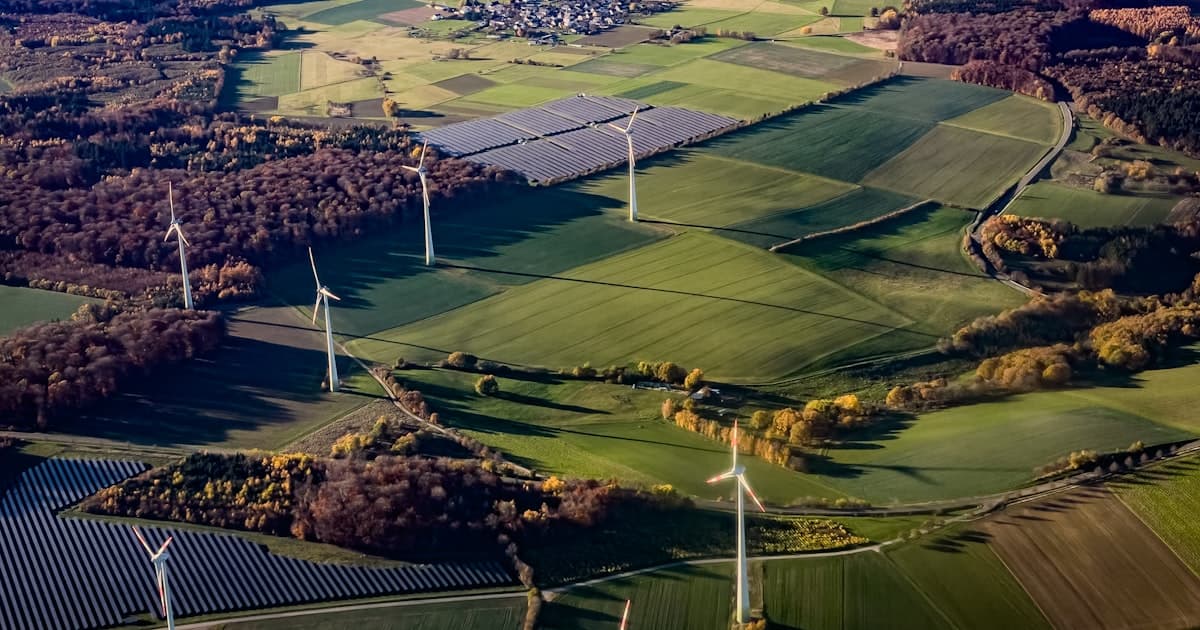
The United States is on track for its largest year of power plant construction in over two decades. According to the U.S. Energy Information Administration's Preliminary Monthly Electric Generator Inventory, developers plan to add 86 gigawatts (GW) of new utility-scale generating capacity to the grid in 2026 — smashing the 53 GW record set just last year.
What's striking isn't just the total — it's the composition. Solar, battery storage, and wind account for 93% of all planned additions, while natural gas makes up just 7%. This is the year clean energy stops being the "alternative" and becomes the default.
Here's where it's all going.
Solar: 43.4 GW Across 50 States, Led by Texas
Solar dominates the 2026 pipeline with 43.4 GW of planned capacity — 51% of all additions and a 60% jump over the 27.2 GW installed in 2025. After a dip from 2024's 30.8 GW, solar deployment is accelerating again, driven by falling module costs and a rush to capture federal tax credits.
The geographic concentration is notable:
- Texas: 40% of all new solar capacity. The Lone Star State continues to dominate, anchored by the massive Tehuacana Creek 1 Solar and BESS project in Navarro County — 837 MW of solar paired with 418 MW of battery storage, making it the single largest solar project expected online this year.
- Arizona: 6% — Desert solar remains a steady contributor.
- California: 6% — Still building, though at a slower pace than its battery storage boom.
- Michigan: 5% — A surprising entrant in the top four, signaling that Midwest solar economics have crossed a viability threshold.
The remaining 43% is spread across dozens of states, reflecting how solar has become economically competitive in virtually every U.S. market.
Battery Storage: 24 GW, Concentrated in Three States
Battery storage is the fastest-growing segment, with 24 GW planned for 2026 — a 60% increase over the 15 GW installed in 2025. To put this in perspective, total U.S. battery storage capacity installed across the entire five-year period from 2021 through 2025 was roughly 40 GW. This year alone adds more than half of that.
The concentration here is extreme. Three states account for 80% of all new battery storage:
- Texas: 53% (12.9 GW) — More than half of the nation's battery storage. ERCOT's energy-only market design creates strong price signals for storage, and developers are responding aggressively. Major projects include Lunis Creek BESS (621 MW, Jackson County) and Clear Fork Creek Solar and BESS (600 MW, Wilson County).
- California: 14% (3.4 GW) — CAISO continues to build storage to manage its solar duck curve. The Bellefield 2 Solar & Energy Storage project in Kern County adds 500 MW.
- Arizona: 13% (3.2 GW) — Emerging as a major storage market alongside its solar buildout.
The math is clear: where solar goes, storage follows. Texas, California, and Arizona lead in both categories.
Wind: 11.8 GW, Headlined by Offshore Milestones
Wind capacity additions are set to more than double year-over-year, from roughly 5.8 GW in 2025 to 11.8 GW planned for 2026. While still below the 14+ GW peaks of 2020–2021, this year includes landmark offshore projects that represent a new chapter for U.S. wind power:
- SunZia Wind (New Mexico): 3,650 MW — The largest single wind project in the pipeline, paired with a dedicated 550-mile transmission line to deliver power to Arizona markets.
- Vineyard Wind 1 (Massachusetts): 800 MW — America's first utility-scale offshore wind farm, after years of development and construction challenges.
- Revolution Wind (Rhode Island): 715 MW — Another East Coast offshore milestone.
Onshore wind is concentrated in the traditional wind corridor, with New Mexico, Texas, Illinois, and Wyoming accounting for roughly 60% of additions.
Natural Gas: Still Building, But Shrinking Share
Natural gas accounts for just 6.3 GW of planned 2026 capacity — 7% of the total. That's a significant shrinkage from its historically dominant role. The additions are split between combined-cycle plants (3.3 GW) and peaker combustion turbines (2.8 GW), concentrated in Texas, Oklahoma, Ohio, Tennessee, and Florida.
The two largest gas projects — Orange County Advanced Power Station (1,158 MW, Texas) and Trumbull Energy Center (900 MW, Ohio) — are both combined-cycle plants designed to run as baseload or intermediate generation, not peakers. This suggests utilities still see a role for gas as a reliability anchor, even as the economics increasingly favor renewables-plus-storage for new dispatchable capacity.
What the Grid Operators Are Seeing
The state-level data maps directly onto grid operator territories:
- ERCOT (Texas) is absorbing the biggest share of the national buildout — dominant in solar, dominant in storage, and still adding gas. The interconnection queue challenges that plagued 2024–2025 haven't slowed developers.
- CAISO (California) continues its shift toward a storage-heavy grid, adding 3.4 GW of batteries to manage solar intermittency.
- PJM (Mid-Atlantic/Midwest) is seeing diversified additions — Michigan solar, Ohio gas, and Pennsylvania wind.
- ISO-NE (New England) gains its first major offshore wind capacity with Vineyard Wind 1 and Revolution Wind, fundamentally changing the region's generation mix.
The Caveat: Planned vs. Built
A word of caution: these are planned additions based on developer filings, not guaranteed completions. Historically, about 80% of planned capacity in a given year actually comes online. Supply chain disruptions, permitting delays, interconnection bottlenecks, and financing challenges can all push projects into later years.
Even at an 80% realization rate, 2026 would still deliver roughly 69 GW — well above 2025's record of 53 GW. The direction of travel is clear.
Bottom Line
The 2026 capacity pipeline tells a story of structural transformation, not incremental change. When 93% of new power plants being built in the world's largest economy run on wind, solar, and batteries, the energy transition has moved from policy aspiration to market reality. The remaining question isn't whether clean energy will dominate — it's whether the grid can absorb it fast enough.
Quick Answers
How much new clean energy capacity is the U.S. adding in 2026?
The U.S. plans to add 86 GW of new generating capacity in 2026, with 93% coming from solar (43.4 GW), battery storage (24 GW), and wind (11.8 GW), according to EIA data.
Which state is adding the most solar in 2026?
Texas leads with 40% of all new solar capacity, followed by Arizona (6%), California (6%), and Michigan (5%).
Which state is adding the most battery storage in 2026?
Texas dominates with 53% (12.9 GW) of all new battery storage, followed by California at 14% (3.4 GW) and Arizona at 13% (3.2 GW). These three states account for 80% of the national total.
What are the largest clean energy projects coming online in 2026?
The largest projects include SunZia Wind in New Mexico (3,650 MW), Tehuacana Creek 1 Solar and BESS in Texas (837 MW solar + 418 MW storage), Vineyard Wind 1 in Massachusetts (800 MW offshore wind), and Revolution Wind in Rhode Island (715 MW offshore wind).
Data source: U.S. Energy Information Administration, Preliminary Monthly Electric Generator Inventory, December 2025. Published February 20, 2026.